
Page Pearls
Page pearls are the small yet profound insights that shimmer within the pages of a text—those concise, impactful lines that capture deep wisdom in just a few words. They stand out as moments of clarity and reflection, offering readers valuable takeaways that linger long after the page is turned.
Often subtle but powerful, these literary “pearls” elevate the reading experience, transforming ordinary passages into a source of inspiration and intellectual enrichment.
I have tried to gather some pearls from the books I have been reading and I am presenting them here for those who wish to benefit from these insights.
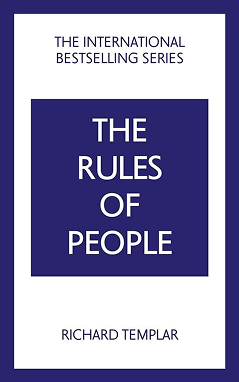
The Rules of People
The Rules of People by Richard Templar – a simple book with fairly simple rules but one rule that caught my attention was on how to thank people the right way.
The right way? Is there a specific way? Yes! The article read "Let the person know what you're grateful for. Is it their endless patience? Their attention to detail? Tell them in words—never assume they know. Yes, they know what they did, but they won’t know what you truly valued unless you tell them." This made me pause and reflect.
I’ve thanked people a million times, but I’ve not too often paused to say, "Hey, you made me feel like a million bucks" or "Thank you for your advice. You’re basically a superhero in disguise." I realized that a lot of my "thank you" notes have often been incomplete. How tragic!
But then it hit me—when I coach my clients, they don’t just say “thank you”; they actually tell me how the coaching has helped them. Sure, they are responding to my request for feedback, but they could easily just stop at a “Thanks, It was helpful.” Instead, they share in detail how the sessions impacted them, how they felt being heard without being judged and after hearing that, I always walk away with this amazing sense of fulfillment, knowing that I’ve made at least a small difference in their world.
So let’s reflect on this and share the “thank-yous” that truly matter
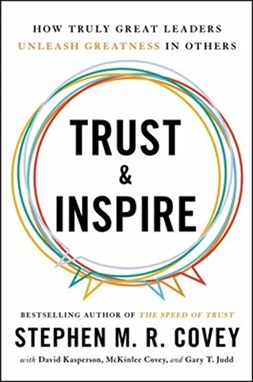
Trust and Inspire
"Trust and Inspire" – a perfect book that explains how great leaders unlock potential in others.
The book highlights the diminishing relevance of the "command and control" leadership style and promotes “trust and inspire”. Command and control is transactional—focused on achieving quick results, such as closing a deal or completing a task, managing undesirable behaviors and doing it swiftly. On the other hand, "trust and inspire" is transformational. It centers on building relationships, developing people’s capabilities, enabling growth, and empowering individuals.
One key concept from the book that particularly resonated with me and made me reflect on my own approach was the difference between motivation and inspiration. It turns out, motivating people can be boiled down to two basic categories: carrot or stick. The carrot is the shiny reward, and the stick is the threat of unpleasant consequences. (Basically, gain or pain.) Motivation works for sure, but let’s be real—it’s kind of giving someone a donut to make them run a marathon. It’ll get them moving but when the sugar high wears off, they’ll crash hard.
But inspiration? Ah, that’s where the magic happens. Inspiration is like lighting a fire inside someone and watching them turn into a human rocket of passion and excitement. When we inspire others, they feel their work matters—and even better, that they matter. They don’t want to fail not because they’re scared of being yelled at but because they care about their work and the company. They feel proud of what they’re doing as they know they’re not just punching a clock; they’re building something meaningful. That is the power of inspiration.
Here are some of the ways by which you can inspire your teams –
- Lead by example
- Show empathy
- Recognize and reward
- Empower your team
- Invest in their development
- Communicate openly
So the next time you are dealing with your team members ask yourself if you are motivating or inspiring them? Because that’ll tell you if you're in for a short win or a long-lasting victory.
Some great tips by Naval Ravikant (from his book - The Almanack of Naval Ravikant) to learn how to read:
- Start by reading what excites you, until you eventually develop a love for reading.
- Reading isn't a race—when a book is really good, take your time with it.
- You might grab many books, but only a few will truly shape your understanding. It doesn’t matter what you read in the beginning. Over time, your interests will guide you to the books that can profoundly change your life.
- If a book doesn’t resonate with you, put it down. There are an infinite number of books out there to read.
- The number of books completed is a vanity metric. As you know more, you leave more books unfinished. Focus on new concepts with predictive power.
- Explain what you have learned to someone else. Teaching forces learning.
- If you feel confused while reading, think of it like the physical discomfort you feel during a workout. It’s the mental equivalent, helping you.
The Almanack of Naval Ravikant
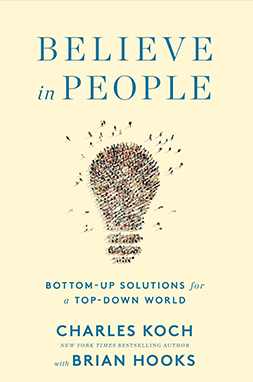
Believe in People by Charles Koch with Brian Hooks
What happens when leaders genuinely believe in people?
This is the question I was left reflecting on after reading Believe in People by Charles Koch with Brian Hooks.
The book is not simply about leadership. It is about a fundamental belief in human potential — that every person has a unique gift, that people want to contribute, and that organisations and societies progress when we create the conditions for people to discover, develop and apply those gifts.
Four ideas from the book particularly stayed with me.
“Learn everything you can… because you never know when it will come in handy.”
This simple advice captures the power of lifelong learning. In today's corporate world, where technology, roles and skills are changing rapidly, perhaps the greatest career security is not expertise in one thing but the ability to continuously learn, unlearn and adapt.
“Everyone has a gift.”
This challenges leaders to look beyond resumes, job titles and past performance. Our role as leaders is to discover what people are uniquely good at and create opportunities for them to use those strengths. Sometimes the person who appears average in one role can be exceptional in another.
“At last, I found a way to contribute.”
Koch uses Frederick Douglass's story to illustrate the human desire to contribute, even in the most difficult circumstances.
This has a powerful implication for organisations: people don't want to simply complete tasks. They want to know that their work matters. As leaders, we need to connect people's everyday work with the value it creates for customers, colleagues and the organisation.
And finally:
"Everyone can contribute and succeed.”
The book argues for a shift from controlling people to empowering them. When people closest to a problem have the freedom and responsibility to solve it, organisations can tap into knowledge and ideas that they didn’t even know existed. Thus, our role as leaders is to create the environment, opportunity and autonomy that allows people to realise their full potential.
So next time, instead of asking, “How do I get more from my people?”, perhaps we should ask:
“What could my people achieve if I genuinely believed in their potential and created the conditions for them to succeed?”
That, for me, is the essence of Believe in People.
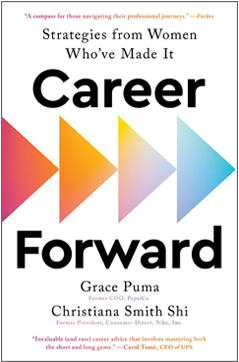
Career Forward is written by two highly successful women and draws heavily on their experiences as women in corporate leadership. Here are some of the key takeaways -
- Don't evaluate an opportunity only by what it gives you today. Consider what experience, skills, exposure and relationships it will add to your career for tomorrow.
- Treat your career like an investment. Every important assignment, relationship, skill and experience should increase your professional value. Sometimes a lateral move that builds your capabilities may be more valuable than an immediate promotion.
- Working hard isn't enough. Understand the value you create and don't be reluctant to advocate for the opportunities, recognition and compensation that reflect that value.
- Don't try to become good at everything. Identify the combination of strengths, experiences and qualities that differentiate you, and deliberately build your career around them.
- As you become senior, success is no longer only about what you accomplish. It is also about who you are as a leader—your values, behaviours, reputation and the experience people have working with you.
- Own your ambition. This one is particularly relevant for women. Don't feel the need to minimise or apologise for ambition. Be clear about what you want and be willing to pursue opportunities that move you towards it.
One overarching lesson
You can be extremely successful in your current role and still become professionally stagnant if you aren't adding new skills, experiences, relationships and perspectives.
A useful question to ask periodically is:
“Is what I am doing today increasing my professional value for tomorrow?”
That single question captures much of the philosophy behind Career Forward.
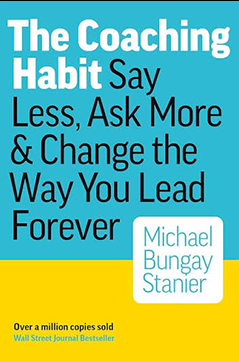
“The minute we begin to think we have all the answers, we forget the questions.” — Madeleine L’Engle
Such a powerful thought shared by Michael Bungay Stanier in his book The Coaching Habit: Say Less, Ask More & Change the Way You Lead Forever — and one that made me reflect on how we lead.
As we move up the hierarchy, it’s easy to start believing that we are expected to have all the answers.
And in the fast-paced world we operate in, where most of us are constantly juggling multiple priorities, giving an immediate solution often feels quicker and easier than asking a question.
We do it at work.
We do it with colleagues and team members.
We even do it at home with our children.
But what if, sometimes, the most helpful thing we can do is simply ask?
In The Coaching Habit, Michael introduces what he calls the “Lazy Question”:
“How can I help?”
A simple question, but a powerful one.
Stanier explains that its power is twofold :
It creates clarity -
It encourages the other person to make a clear and direct request. Sometimes, people themselves are not entirely sure what they need when they start a conversation. Asking “How can I help?” makes them pause, think and articulate what they actually need from you.
It stops us from assuming we know the answer-
Instead of immediately jumping into problem-solving mode, we give the other person the space to think — and ourselves the opportunity to understand before acting.
Perhaps one of the shifts we need to make as leaders is from :
“I have the answer.”
to
“I have a question.”
Because leadership is not always about having the right answers.
Sometimes, it is about asking the right questions.
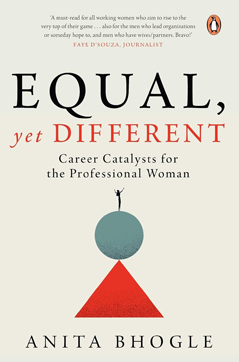
In Equal, Yet Different, Anita Bhogle shares the concept of the Winning Triangle which highlights three important ingredients for success: Ability, Attitude and Passion.
Ability provides the competence to perform, attitude determines how we respond to challenges and opportunities, and passion provides the energy and commitment to keep moving forward.
However, Bhogle's argument is that this triangle, while true for anyone, isn't sufficient to explain a woman's career trajectory. Women face a fourth, decisive factor that men typically don't have to weigh in the same way: the choices they're forced to make — around marriage, motherhood, caregiving, family expectations and whose career takes priority at home.
Her point is that a woman can have all the ability, attitude, and passion in the world, but a single life-stage decision can derail or redirect an otherwise winning trajectory. Choice isn't a personal failing or a lack of ambition; it's a structural reality shaped by conditioning, guilt, and unequal domestic expectations. So, the triangle becomes four-cornered shape where choice interacts with and often constrains the other three.
This thought is particularly relevant for leaders and organisations: talent may be equal, but the circumstances in which that talent has to flourish may be different. By building flexibility into how work is structured, showing empathy during periods of personal transition and prioritizing results over rigid processes, leaders can help in protecting ability from being limited, attitude from eroding and passion from being extinguished by outside pressures. Thus we need to create workplaces where women can engage fully and consistently over time—allowing the Winning Triangle to function at its fullest potential within a fairer, more inclusive organizational culture.

Quiet by Susan Cain challenges the idea that being outgoing, highly social and vocal is the ideal personality—for being a leader.
Here are some Leadership takeaways from her book -
1. Listen more, especially when you have capable people around you.
One of the strongest findings Cain discusses is that introverted leaders tend to be more receptive to employees' suggestions and less inclined to dominate the conversation.
2. Don't confuse confidence with competence.
People who speak quickly and confidently naturally attract attention. But leaders need to consciously separate how confidently an idea is presented from how good the idea actually is.
3. Create space for people who think before they speak.
A meeting dominated by three vocal people isn't necessarily a meeting in which everyone has contributed.
Leaders can deliberately invite quieter employees into the discussion, circulate questions beforehand, ask people to submit ideas independently, or give everyone thinking time before discussion.
4. Don't make every problem a meeting.
We have developed a tendency to respond to problems with: “Let's get everyone in a room and brainstorm.”
Cain argues that creativity also requires solitude. Research suggests that people can generate stronger ideas when given an opportunity to think independently before collaborating.
A better leadership practice can be:
Think individually → generate ideas → come together → debate → decide.
Rather than:
Come together → whoever talks fastest shapes the discussion.
5. Give people permission to work differently.
Not everybody performs best in constant collaboration. Cain questions workplaces built entirely around open spaces, continuous interaction and teamwork.
A good leader therefore doesn't ask, “Why isn't this person more like the rest of the team?” They ask, “What environment will allow this person to do their best work?”
6. Watch for overlooked leadership talent.
Organisations can inadvertently promote people who look like leaders—visible, articulate, socially confident and comfortable with self-promotion.
That can mean quieter employees are overlooked even when they possess judgment, persistence, concentration and the ability to bring out the best in others. Research discussed by Cain also notes that introverts can have more difficulty rising into leadership precisely because they are less inclined toward self-promotion.
Cain isn't arguing that introverted leadership is superior.
Infact there is no universally ideal leadership personality.
Leadership maturity is knowing when your natural style is helping—and when you need to adapt.
Your responsibility as a leader is not to be the most powerful voice in the room. It is to create a room in which the best ideas can be heard.
For HR leaders in particular, Quiet also raises an important question: Are our recruitment, promotion, talent reviews and leadership-development systems identifying genuine leadership potential—or simply rewarding the people who are best at displaying it?
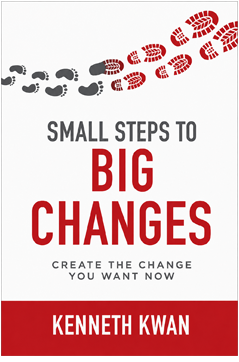
One of the most interesting aspects of the book is its focus on solutions rather than problems.
We often spend considerable time analysing what went wrong, why it happened and who was responsible. Kwan encourages us to shift the conversation from “Why is this happening?” to “What can we do differently from here?”
Another thought shared by the author is the importance of small wins. Large goals can sometimes feel overwhelming, but breaking them into smaller, achievable actions creates a sense of progress. And progress builds confidence. Each small success tells us, “I can do this,” making the next step a little easier.
The book also encourages us to notice what is already working. Instead of focusing only on gaps and weaknesses, ask : When did things work well? What did we do differently then? How can we do more of that? It is a subtle shift in thinking, but a powerful one.
For leaders, this is particularly relevant. We often focus on the distance between where our teams are and where we want them to be. Perhaps leadership is also about helping people see how far they have already come and what their next achievable step could be.
The biggest takeaway : Don't underestimate small progress. Big changes are often simply the accumulation of many small steps taken consistently.